ChatGPT Ads Unveils Comprehensive Suite of Advertiser Tools to Elevate Performance Marketing Capabilities


ChatGPT Ads is systematically enhancing its advertising platform with a significant rollout of new advertiser tools, aiming to bridge the gap with more established players in the digital advertising ecosystem. This latest update focuses on core functionalities crucial for performance marketers, including advanced bidding strategies, refined measurement capabilities, robust budget pacing mechanisms, and streamlined campaign management. The strategic evolution of ChatGPT Ads signals a clear intention to empower advertisers with the sophisticated automation and optimization features they have come to expect from industry giants like Google Ads and Meta Ads, thereby lowering the adoption barrier and increasing its viability for campaigns of all scales.
The introduction of these new features marks a pivotal moment for ChatGPT Ads, transitioning it from a nascent advertising solution to a more mature platform poised to compete for performance-oriented marketing budgets. The emphasis on conversion optimization and automation underscores a commitment to delivering measurable business outcomes, a critical factor for advertisers seeking to maximize return on investment.
Key Innovations in the Latest Release
The newest iteration of ChatGPT Ads brings a series of powerful enhancements designed to refine campaign execution and performance. While the provided source material did not detail every specific feature within the update, the general categories highlight a strategic direction:
- Smarter Bidding Strategies: The platform is introducing more intelligent bidding algorithms. This likely includes the expansion of automated bidding options that move beyond simple click-based optimization to focus on higher-value actions, such as conversions, app installs, or specific revenue targets. This shift is critical for advertisers aiming to align ad spend directly with business objectives.
- Improved Measurement and Attribution: Robust measurement is foundational to effective advertising. The inclusion of enhanced measurement capabilities suggests improvements in tracking user journeys, understanding campaign effectiveness, and attributing conversions accurately across various touchpoints. This is further bolstered by integrations with leading third-party measurement providers.
- Enhanced Budget Pacing: Effective budget management is essential for campaign success. New tools for budget pacing will likely offer advertisers greater control and visibility over their spending, ensuring budgets are utilized efficiently throughout the campaign duration and preventing premature depletion or underutilization.
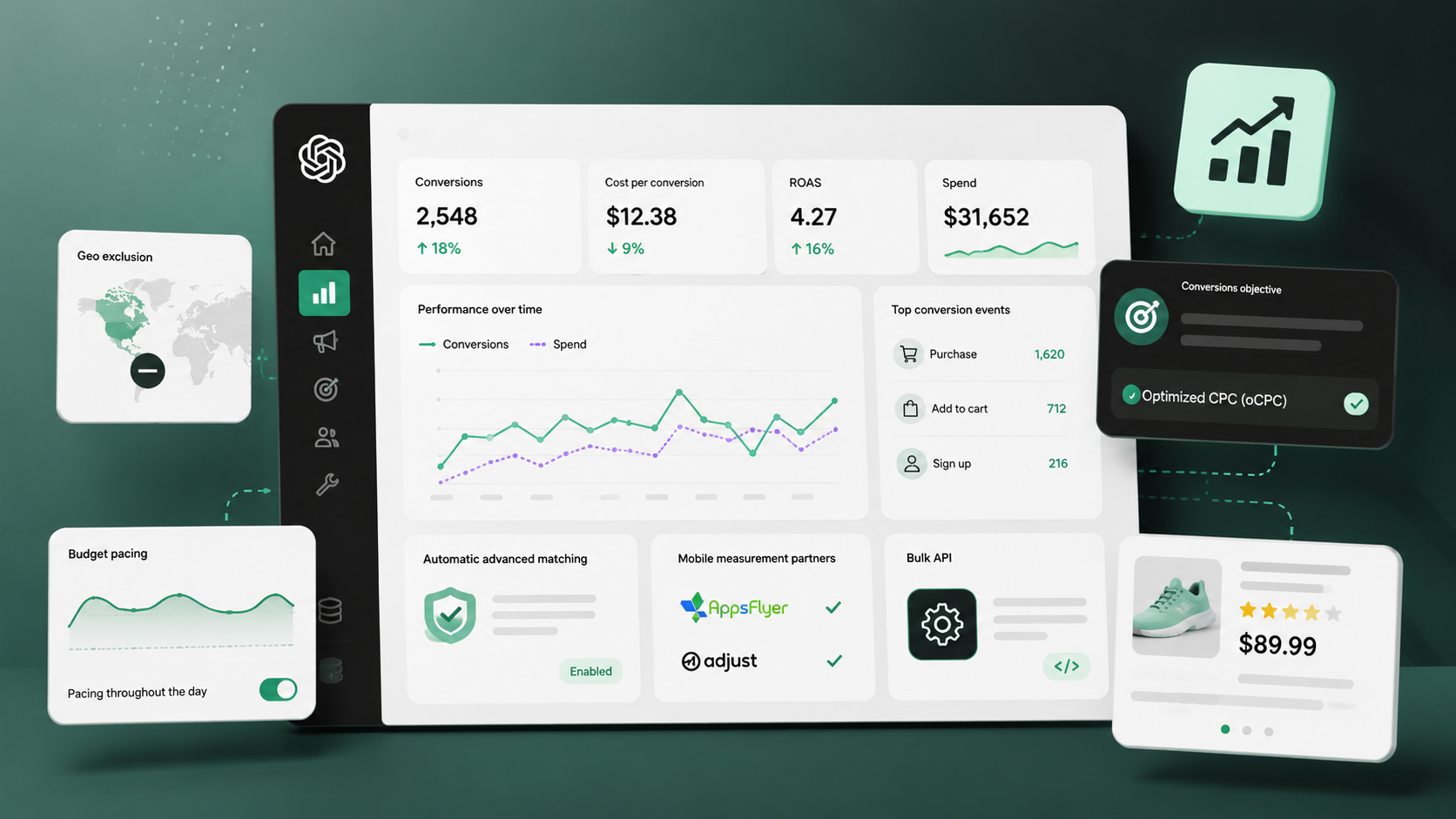
- Streamlined Campaign Management: The introduction of tools for improved campaign management, such as advanced matching and bulk API support, signifies a move towards greater operational efficiency. These features are vital for advertisers managing numerous campaigns or large volumes of ad assets, enabling quicker updates and more scalable operations.
Deep Dive into New Capabilities
The strategic enhancements introduced by ChatGPT Ads are designed to address long-standing needs within the performance marketing community. The integration of conversion-optimized bidding, for instance, represents a significant step forward. Previously, advertisers might have focused primarily on driving clicks, a metric that doesn’t always translate directly to business success. With conversion optimization, bidding strategies can now be aligned with specific business outcomes, such as lead generation, product purchases, or app downloads, thereby maximizing the value derived from ad spend. This is particularly relevant in today’s competitive digital landscape, where every dollar spent needs to demonstrate tangible results.
The practical implications of integrating with established mobile measurement partners like AppsFlyer and Adjust cannot be overstated. For advertisers focused on mobile app promotion, these integrations offer a more streamlined and reliable method for tracking app installs, in-app events, and user LTV (Lifetime Value). This granular data allows for more precise campaign optimization and a clearer understanding of the ROI generated from app advertising efforts. Without these integrations, app advertisers would face significant hurdles in accurately measuring campaign performance and making data-driven decisions.
Furthermore, the inclusion of features like geo-exclusions, improved attribution models, and bulk API support directly addresses the needs of advertisers operating at scale. Geo-exclusions allow for the precise targeting of specific geographic areas, excluding those that are less profitable or irrelevant to the campaign objectives. Enhanced attribution models provide a more nuanced understanding of which marketing touchpoints contribute most to conversions, moving beyond last-click attribution to a more holistic view. Finally, bulk API support empowers advertisers to manage and update large numbers of campaigns, ad groups, and ads programmatically, significantly reducing manual effort and the potential for errors. This is a standard expectation for any platform aiming to serve enterprise-level advertisers.
The Maturation of ChatGPT Ads
This latest release underscores a strategic commitment by ChatGPT Ads to mature its core advertising infrastructure, rather than relying on singular, attention-grabbing features. This approach is crucial for building advertiser confidence and fostering long-term adoption. By mirroring functionalities already present in established platforms like Google Ads and Meta Ads, ChatGPT Ads is effectively lowering the barrier to entry for performance marketers.
For instance, the introduction of average daily budgets provides advertisers with a predictable framework for managing their spending. This is a fundamental feature that allows for consistent campaign delivery without the risk of exceeding allocated funds unexpectedly. Advanced matching capabilities enhance the accuracy of conversion tracking and audience segmentation by improving the matching of user data, leading to more effective targeting and reporting. Similarly, bulk campaign management tools, whether through a user interface or API, are essential for efficiency. Advertisers often need to create, modify, or pause campaigns in large batches, and the availability of such tools is a key differentiator for platforms serving professional marketers.
The timeline for these developments suggests a phased approach to platform building. Initially, emerging ad platforms often focus on core ad serving and basic targeting. As they mature, the focus shifts towards sophisticated optimization, measurement, and management tools. This trajectory indicates that ChatGPT Ads is moving through this natural growth cycle, progressively building the robust feature set required to attract and retain serious advertisers. The absence of a single "flagship" feature in this release, and instead a focus on a broad suite of foundational improvements, speaks to a strategic imperative to build a comprehensive and reliable advertising solution.
Broader Implications for the Advertising Landscape
The continuous development of ChatGPT Ads has significant implications for the broader digital advertising landscape. As a platform backed by a well-known AI technology, its expansion into advertising was always anticipated. However, its focus on performance marketing tools signals a direct challenge to incumbents. For advertisers, this increased competition is generally beneficial, as it can lead to:
- Increased Innovation: To capture market share, ChatGPT Ads will likely continue to innovate, pushing other platforms to do the same.
- Potentially More Competitive Pricing: As the platform scales and attracts more advertisers, there may be opportunities for more competitive ad pricing.
- Diversified Advertising Options: Advertisers gain more choices for where to allocate their ad budgets, reducing reliance on a few dominant players.
The fact that ChatGPT Ads is building tools that are analogous to those found on Google Ads and Meta Ads is a strategic play. It leverages the familiarity of these established tools to make its own platform more accessible. Advertisers who are proficient in using Google Ads or Meta Ads will find the transition to ChatGPT Ads less daunting, as the underlying principles of campaign setup, optimization, and reporting will be recognizable. This is a deliberate strategy to onboard advertisers who might otherwise be hesitant to experiment with a new, unproven platform.
The focus on automation and optimization is particularly important. As the digital advertising space becomes more complex, with increasing privacy regulations and evolving consumer behavior, automated solutions become indispensable. Platforms that can effectively leverage AI to manage bidding, target audiences, and optimize creative performance will be best positioned for success. ChatGPT Ads, with its AI heritage, is well-placed to capitalize on this trend.
Supporting Data and Industry Context
While specific performance data for ChatGPT Ads was not provided in the original article, the general trend in digital advertising performance is towards increased automation and data-driven decision-making. Global digital ad spending is projected to exceed $600 billion in 2023 and continue its upward trajectory, with a significant portion of this growth driven by performance-based advertising models. Within this context, the demand for sophisticated tools that can ensure efficient spend and measurable ROI is at an all-time high.

The rise of AI in advertising has been a dominant theme for the past several years. From predictive analytics to generative AI for ad creative, AI is transforming every facet of the advertising workflow. ChatGPT Ads’ enhancements align with this broader industry movement, seeking to harness AI to provide advertisers with a competitive edge. The integration with third-party measurement providers like AppsFlyer and Adjust also reflects an understanding of the industry’s need for verifiable and standardized measurement, especially in the mobile app ecosystem. These partners are crucial for providing advertisers with independent verification of campaign results, which is vital for building trust and ensuring accountability.
The continuous development of features like bulk API support is also indicative of the platform’s ambition to serve larger advertisers. Enterprise-level clients often manage vast numbers of campaigns and require programmatic access to advertising platforms for seamless integration with their existing marketing technology stacks. The availability of robust APIs is a prerequisite for winning such accounts.
Official Statements and Future Outlook (Inferred)
While no direct quotes were provided, the strategic direction of ChatGPT Ads, as evidenced by this update, suggests a clear ambition to become a major player in the performance marketing space. One can infer that the company’s leadership is focused on building a platform that is not only technologically advanced but also practical and effective for advertisers. The emphasis on core functionalities points towards a long-term vision of providing a comprehensive solution for businesses looking to drive measurable results through digital advertising.
The ongoing investment in developing and refining these tools indicates a commitment to the advertising market. As ChatGPT Ads continues to evolve, it is likely to face increased scrutiny and comparison with established players. Its success will depend on its ability to deliver consistent performance, provide transparent reporting, and offer a user experience that is both powerful and intuitive.
The future outlook for ChatGPT Ads appears promising, provided it can continue to execute on its strategic roadmap. By systematically addressing the needs of performance marketers with robust tools for bidding, measurement, and campaign management, the platform is positioning itself for significant growth. The journey from a nascent advertising solution to a mature platform is challenging, but this latest rollout demonstrates a clear understanding of what is required to compete effectively in the highly dynamic digital advertising arena. The company’s ability to integrate AI-powered insights with essential advertising functionalities will be key to its long-term success and its impact on the broader advertising ecosystem.